

Infant Massage for Breastfeeding & Bottle Feeding Support
How Bodywork for Baby Can Improve Their Feeding and Development
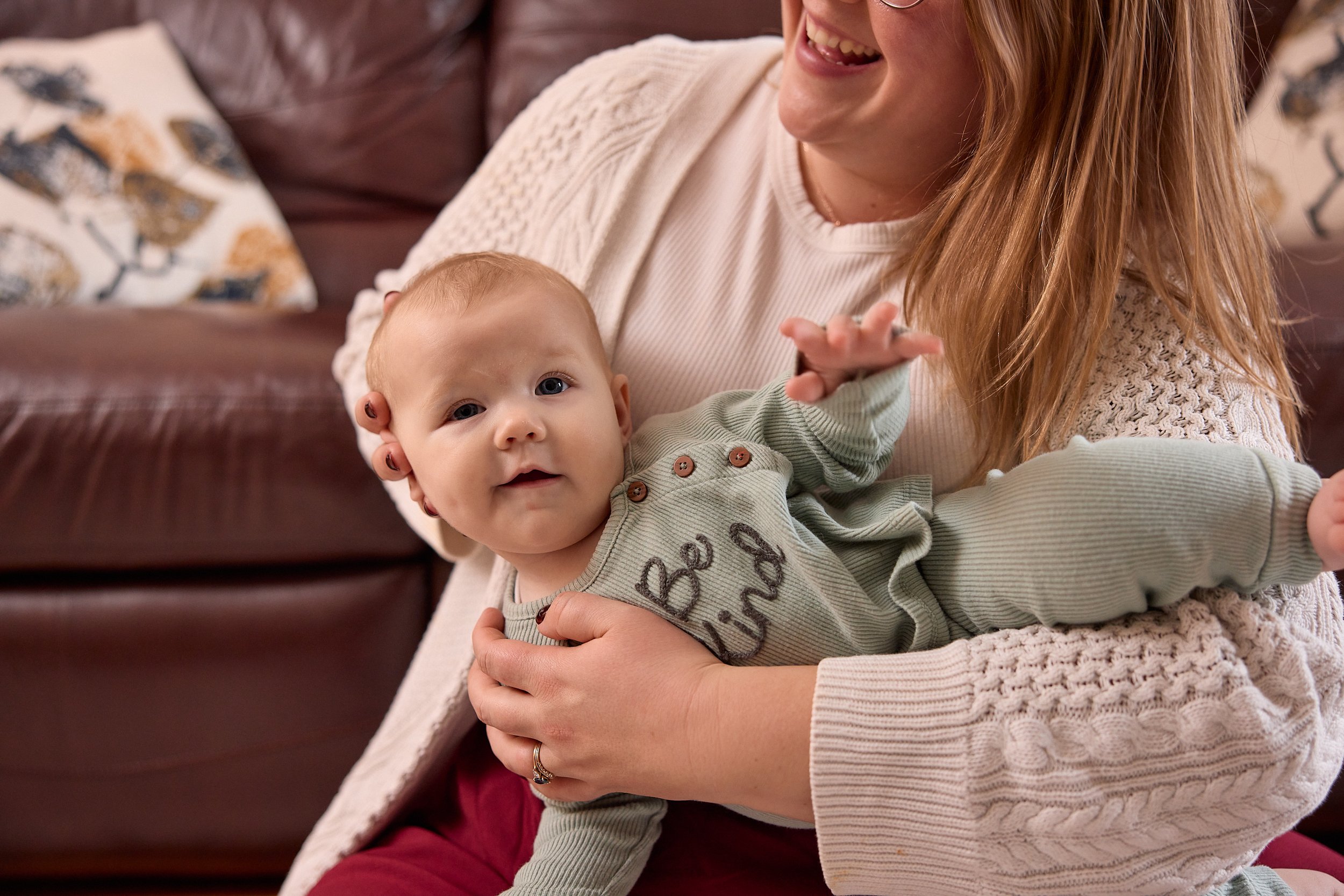
Looking Beyond the Latch
When families experience breastfeeding or bottle feeding challenges, the focus is often placed entirely on the parent.
How can your latch improve? How can you increase milk supply? Which position should you try next?
These are all important questions, but they’re only half of the story.
Feeding is a relationship between two people. Even with an excellent milk supply and great positioning, feeding can still be difficult if your baby’s body isn’t moving comfortably or efficiently.
As both an International Board Certified Lactation Consultant (IBCLC) and a Registered Massage Therapist, I have the unique training to assess both members of the feeding team. Rather than looking only at feeding techniques, I also evaluate how your baby’s body may be influencing their ability to breastfeed or bottle feed comfortably and effectively.
For many families, this whole body approach helps uncover pieces of the puzzle that feeding support alone can’t explain.

Could Body Tension Be Affecting Your Baby’s Feeding?
Some babies develop areas of tension or movement preferences in utero, during delivery, or in the early weeks after birth. These subtle patterns can influence how they latch, suck, swallow, breathe, and stay comfortable during a feed.
Many parents are surprised to learn that feeding challenges and body tension can sometimes be connected.
Your baby may benefit from a full body assessment if they:
Struggle to open their mouth wide for a deep latch
Prefer one breast over the other
Struggle to drink and empty the breast
Hands always in fists
Frequently fall asleep while feeding
Are described as “so strong for a newborn”
Always turn their head to one side
Arch, stiffen, or seem uncomfortable during feeds
Dislike tummy time
Cry in the car seat or other reclined positions
Seem generally uncomfortable or difficult to settle
If this sounds like your baby, you can book an initial assessment in your home, right here:
Book Your Initial Lactation Consultation
If feeding has felt harder than you expected, you don’t have to navigate it alone.
Whether you’re breastfeeding, bottle feeding, pumping, or using a combination of all three, a comprehensive assessment of both you and your baby can help identify what’s getting in the way and create a plan that feels achievable.
Book your Initial Infant Massage Appointment OR Initial Lactation Appointment today and experience a wholebody approach that supports feeding, comfort, and your family’s confidence from the very beginning.
Gentle Infant Massage and Movement Therapy
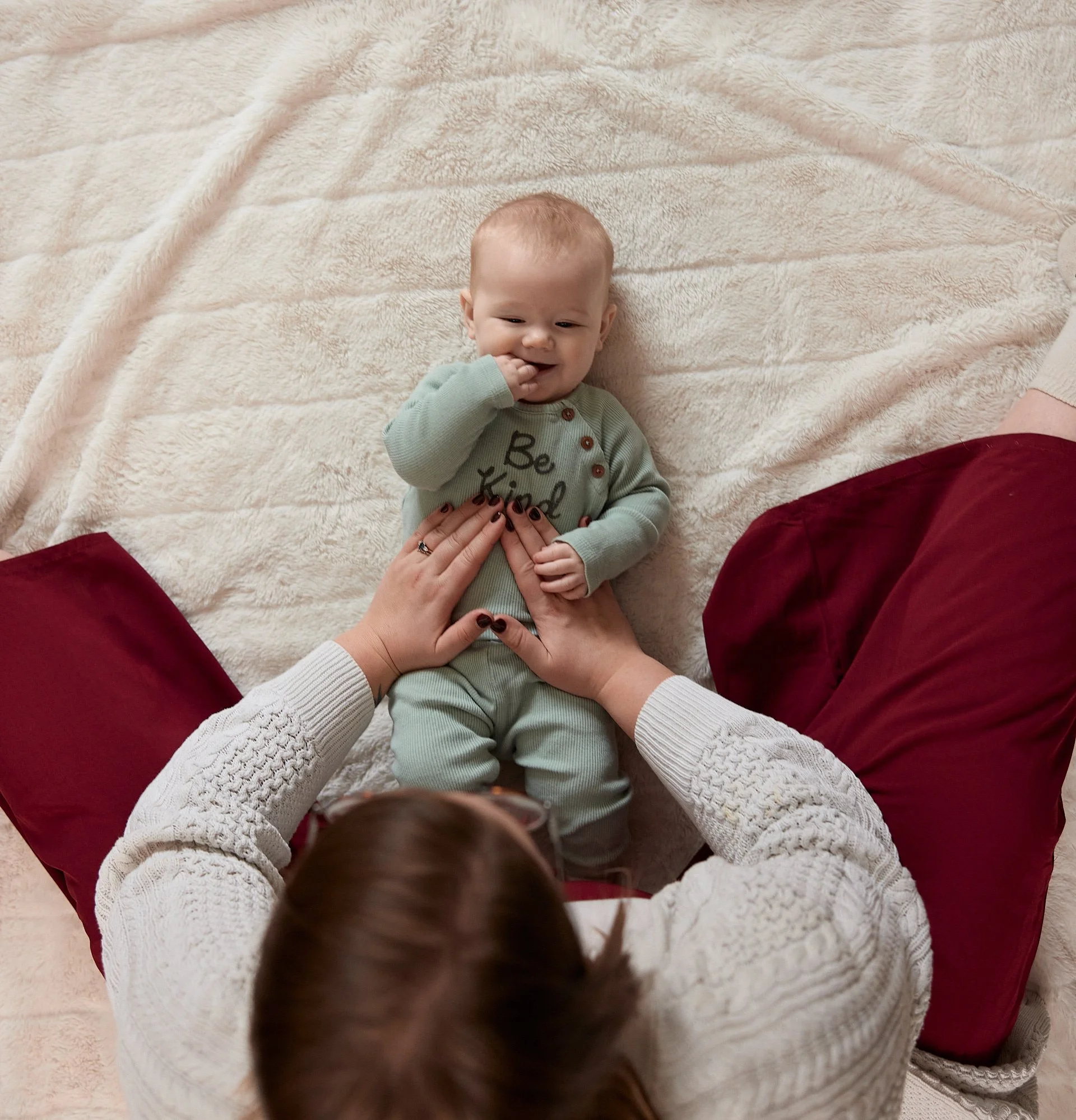
During your appointment, I use gentle infant massage and movement techniques to encourage relaxation, improve comfort, and support balanced movement throughout your baby’s body.
Parents are often surprised by just how gentle these techniques are. Most involve no more pressure than one finger resting on your baby’s skin.
While no treatment can guarantee a specific outcome, reducing tension and improving body comfort can make it easier for some babies to:
Latch more deeply
Transfer milk more efficiently
Stay awake and engaged during feeds
Feed with less effort and fatigue
Move their head more comfortably
Feel calmer during everyday activities
Every treatment is completely baby-led and adapted to your child’s comfort throughout the session.
A Unique Approach to Lactation Support
Most lactation consultations focus primarily on feeding techniques.
My approach is different.
Because of my background as both an IBCLC and Registered Massage Therapist, I can assess feeding from both perspectives. I look at milk transfer, positioning, latch, maternal concerns, and your baby’s body as one complete system.
My goal is not simply to improve one feeding. My goal is to help you understand why feeding is difficult and give you practical, evidence-informed tools that create lasting improvements.